
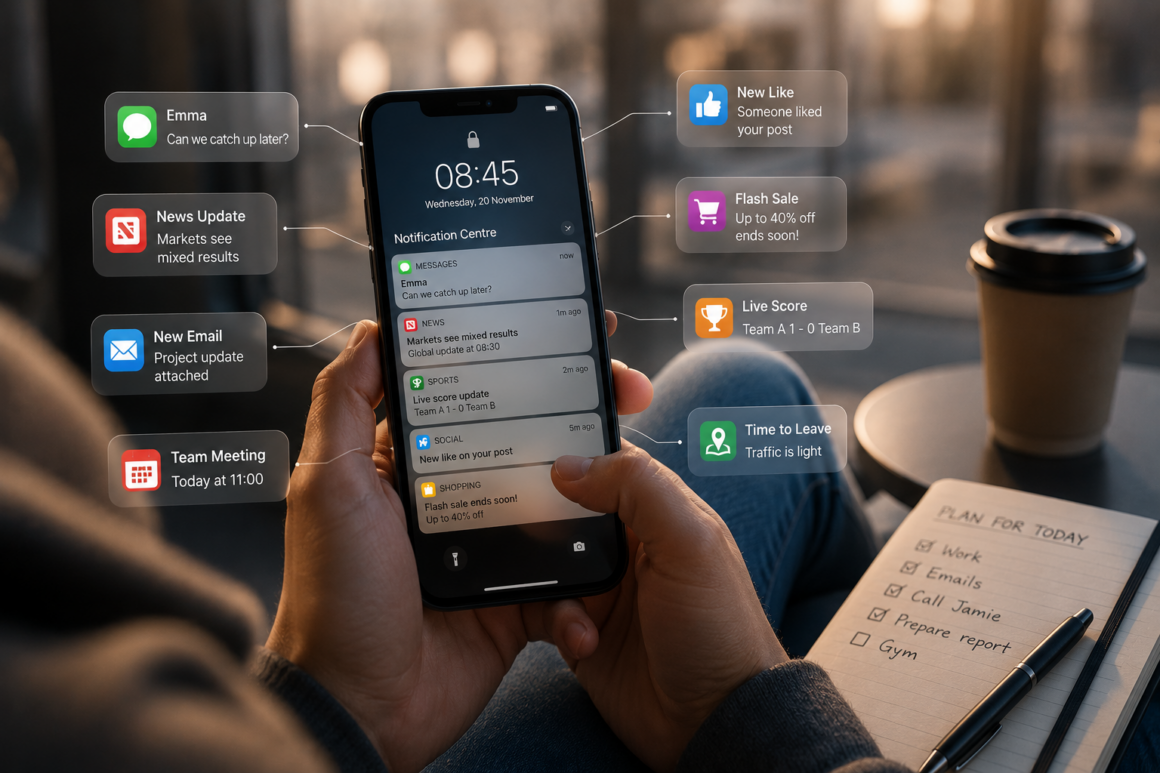
Quick phone break usually kicks off with something tiny: a buzz in your pocket, a red badge icon, or a lock-screen preview you only meant to glance at. You originally just wanted to kill two minutes while waiting for the tram or switching between tasks. But one tap changes everything, and before you know it, you are deep into scrolling messages, skimming headlines, checking live scores, or watching a quick video.
The Small Screen Has Become a Busy Attention Space
Our phones aren’t just for calls or quick texts anymore—they hold half our day in one place. Work threads, family chats, banking, maps, shopping alerts, and sports scores all sit side by side. Each of these apps isn’t competing for your entire evening; they are fighting for those loose, random minutes throughout your day.
That competition changes how people treat pauses. A person waiting for coffee may open a chat, then glance at headlines, then check a score before the order is even ready. The break feels harmless because every action is short. Yet those short actions stack quickly, especially when the phone keeps offering one more thing to check.
Why Short Digital Sessions Feel So Easy to Start
Quick digital habits work because they do not feel like a proper session. There is no setup, no chair to pull out, no decision that says, “I’m doing this now.” The phone is already nearby, the screen wakes fast, and whatever sits at the top of the notifications has the first shot at attention.
During the same small break, a user might reply to a group chat, check match updates, open a creator’s latest post, or visit wolf treasure slot before putting the phone away again. It is the kind of short stop people fold into the day without treating it like a separate activity.
The phrase wolf treasure slot fits that quick-use pattern because it belongs to the sort of digital moment that can start almost accidentally. A spare minute appears, the thumb moves, and the screen offers something familiar. The interesting part is not only what people open, but how little effort it takes to begin.
Notifications Are Designed to Interrupt the Moment
Notifications are small interruptions with surprisingly sharp elbows. A red badge says something is waiting. A sound cuts through a task. A preview gives just enough of a message to make the rest feel unfinished. No single alert has to be dramatic; it only has to be slightly more interesting than the thing happening right now.
Different apps use that pull in different ways. Messengers lean on people and replies. News apps lean on timing. Shopping apps lean on deals that sound temporary. Social feeds lean on curiosity: who posted, who reacted, what changed? One tap can feel harmless, but it often opens a path that was not there ten seconds earlier.
The preview is the hook
A preview works because it leaves a small gap. A name, a score, a discount line, or half a sentence gives the brain something to finish. That unfinished feeling can be stronger than a full message, because the person taps before they have really decided whether the interruption deserves the time.
Screen Breaks Are Really About Control
Short phone pauses are not always about entertainment. Often, they are about taking control of a few loose minutes between bigger tasks. Someone may choose a chat, a score, a feed, a game, or another digital stop because it fits the moment. The screen break works best when the user still feels in charge of leaving.