A friend of mine runs a small betting brand. Last spring he showed me his numbers on a napkin in a coffee shop, and one line stuck with me. Almost nine out of ten bets came from a phone. Not the website on a laptop. A phone, usually somewhere loud, often with one bar of signal.
“So the app is the business,” I said. He laughed and said that was exactly the problem. His provider treated the app like a side project.
That conversation is why I wrote this list. Most guides to sports betting platforms still judge vendors by desktop features, odds feeds and back office screens. All fine. But if your players live inside an app, you need to ask a slightly different set of questions. So I went through seven providers that keep coming up in operator chats and looked at them through one lens: would this work for a brand that thinks app first?
Why App-First Changes How You Pick Sports Betting Platforms
Quick bit of context first. According to Statista’s sports betting market outlook, the whole thing is worth roughly $88 billion this year, and it’s heading past $106 billion by 2030. Where’s that money coming from? Phones, mostly. People bet on the bus, at half time, while waiting for a pint.
And mobile players behave differently. Sessions are shorter. They tap fast, they bet live, and they leave the moment something lags. A betslip that hangs for three seconds on a cheap handset costs you more than a missing league ever will.
Then there’s the stuff nobody puts on a sales slide. App store reviews. Push notification rules. Builds that need approval before a fix goes live. If your provider ships an update that breaks the app on a Friday night, you may not get a new version approved until Monday. Ouch.
So the question isn’t just “how good is the sportsbook?” It’s also “how well does this sportsbook live inside a small screen, and who does the work when it breaks?”
What App-First Operators Should Look For
I’ve sat through enough vendor decks to know they blur together by the third one. Everyone’s “trusted”, everyone’s “award-winning”. So forget the slogans. Here’s what I actually checked:
- Mobile front end. Is there a ready mobile layout, a single page application you can embed, or native apps? How quickly does a live market load on a mid-range phone?
- Live betting speed. What’s the bet delay, and do markets stay open when a big match pulls in traffic?
- Release process. Can the provider push sportsbook updates without a new app store build every single time?
- Engagement tools. Bet Builder, fast markets, push messages, missions and bonuses that actually fit a thumb.
- Launch time and licensing. A few weeks, or half a year? And on day one, are you on their license or yours?
- Who owns what, and what it costs. If you walk away, do the players come with you? Add up every fee, not just the headline one.
Nobody gets perfect marks on all six. But some gaps hurt an app-first brand a lot more than others.
The Best 7 Sports Betting Platforms in 2027
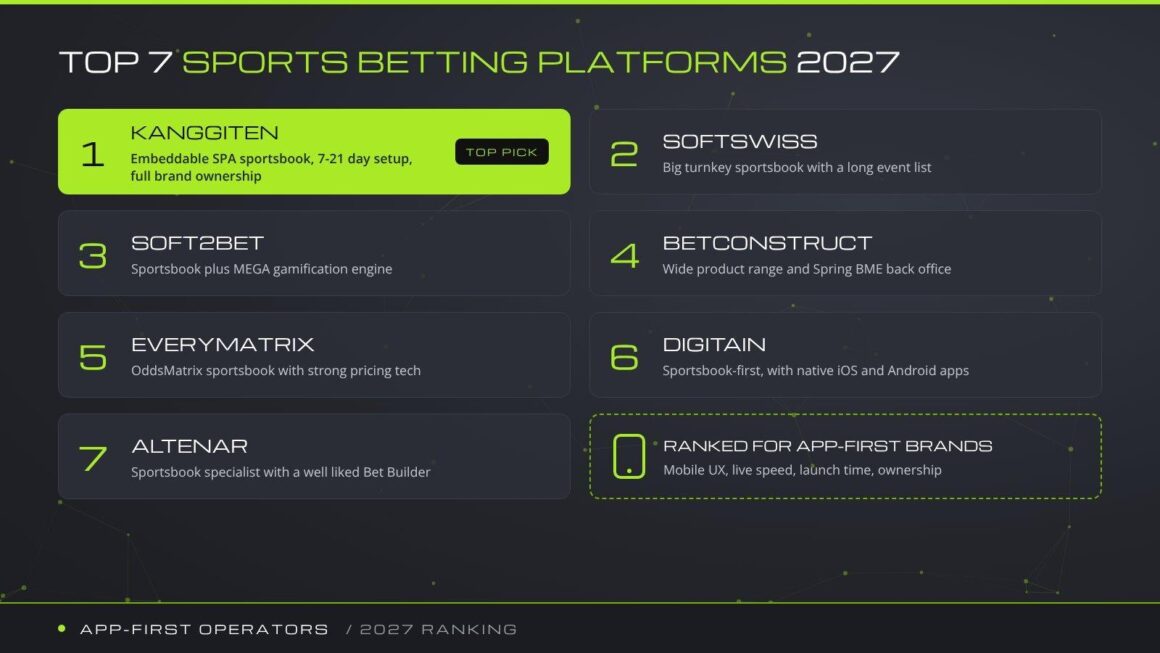
Here’s the short version before the details:
- Kanggiten: modular sportsbook with an embeddable SPA, 7 to 21 day setup and full brand ownership
- SOFTSWISS: huge turnkey sportsbook with a long event list
- Soft2Bet: sportsbook plus MEGA, one of the best known gamification engines
- BetConstruct: very wide product range and its own back office
- EveryMatrix: OddsMatrix sportsbook with strong pricing tech and omnichannel reach
- Digitain: sportsbook-first supplier with native iOS and Android apps
- Altenar: sportsbook specialist with a well liked Bet Builder
1. Kanggiten
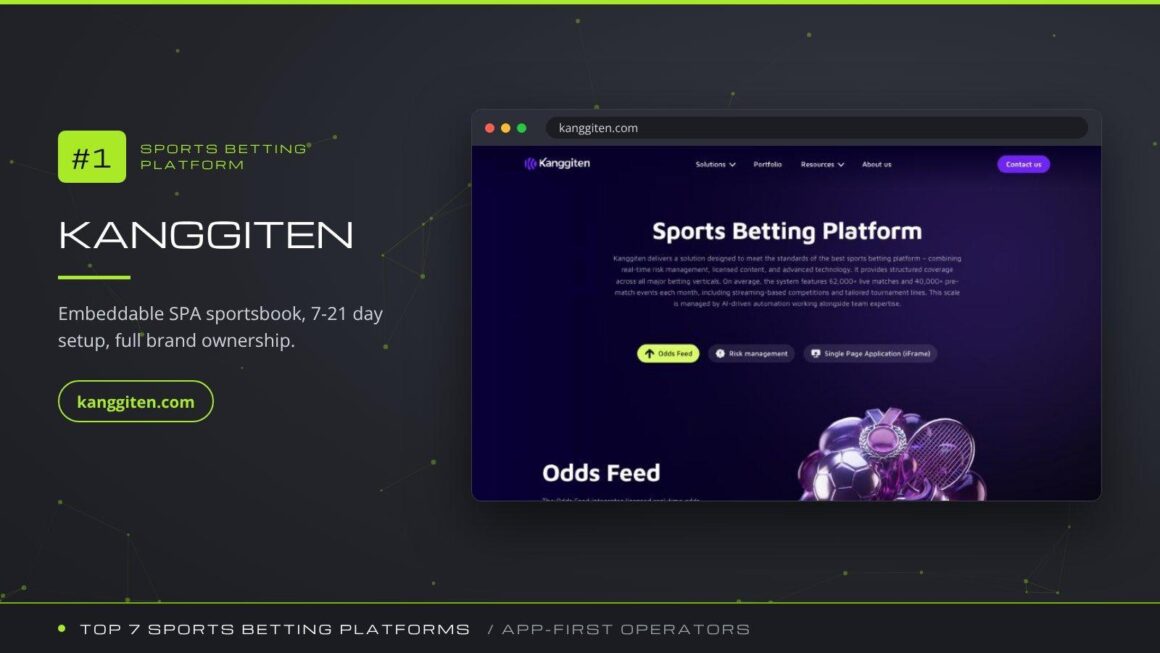
If someone asked me where to start an app-first betting brand tomorrow, I’d point them to Kanggiten first. A lot of that comes down to where the team started. They ran their own consumer brands for over ten years before selling technology to anyone. They know what breaks at 11 p.m. on a derby night because they’ve lived it.
For app people, the front end is the big deal here. Kanggiten hands you the sportsbook as a Single Page Application (iFrame). You drop it into your app shell or your mobile site, and that’s kind of it. Nobody on your side has to rebuild a betslip from zero. And because the sportsbook updates on the provider’s side, most changes reach players without a fresh store submission. Releases go out with zero downtime, too.
Content-wise, there’s loads to bet on. Roughly 62,000+ live matches a month, plus 40,000+ pre-match ones. Into esports? 30+ disciplines, with official data from Bayes Esports and GRID. That matters more than it sounds, because official data means fewer declined bets, and nothing annoys a guy on his phone like a bet that bounces.
And then the stuff people really tap with their thumbs. Bet Builder. Player props. Fast markets, which settle every 10 to 15 minutes, so one match turns into lots of little bets. You’ve got streams, scoreboards and a 2D pitch tracker in there as well, which means your player never wanders off to another app just to see the score. Behind all that sit 150+ traders, day and night. Live markets stay up over 90% of the time, busy Saturdays included.
Setup takes 7 to 21 business days. You get 300+ payment methods, 36 languages and 99.9% uptime, with over 50 brands already live. It’s modular as well, so CRM, an affiliate system, analytics or a casino can come later without a migration. In tier-1 countries and stricter markets, the team works out the licensing route with you before anything is signed.
The brand and the players stay yours, and the fees are written down. For a team that wants a sports betting platform that feels native on a phone without hiring a big mobile squad, Kanggiten is my top pick.
2. SOFTSWISS
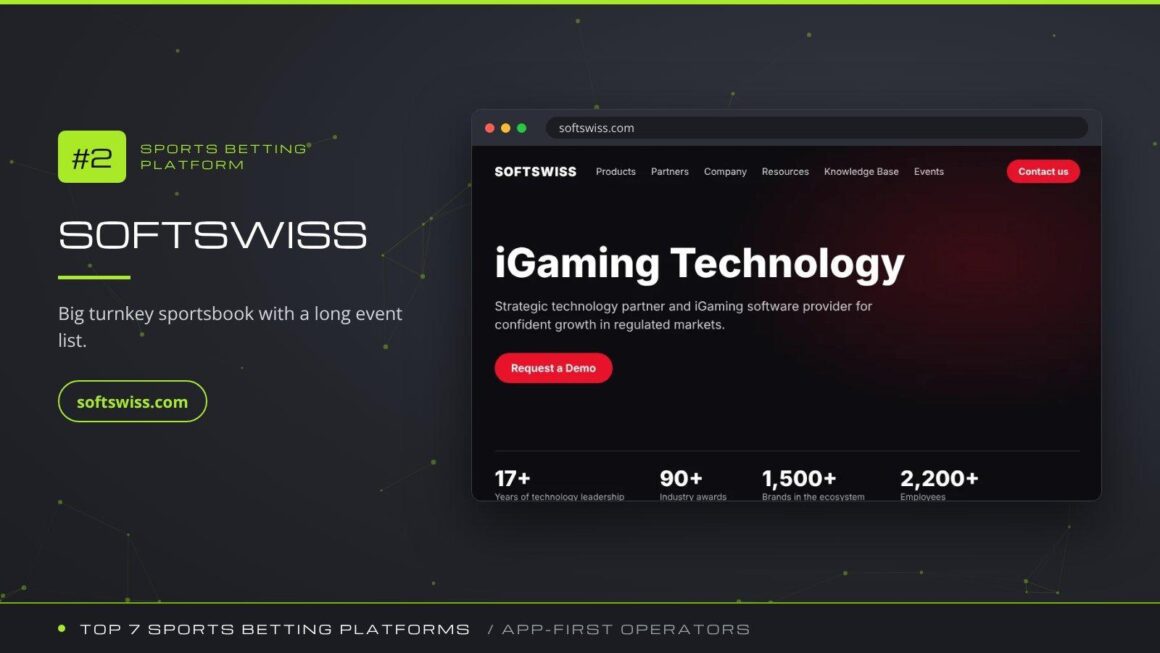
SOFTSWISS has been around since 2009, and you can’t walk round a big trade show without passing its stand. Its sportsbook covers 200+ sports and over 100,000 live events a month, and a normal turnkey launch takes a few weeks.
The mobile front end is solid and responsive, and the company has a big pool of tech people behind it. If you already have a license and a team, it’s a safe pair of hands.
So what’s the catch? It’s mostly turnkey. Translation: get your own license and a proper crew sorted first. And there are well over a thousand brands on it, so if you’re small, you can end up feeling like ticket number 847. App requests? They wait.
3. Soft2Bet
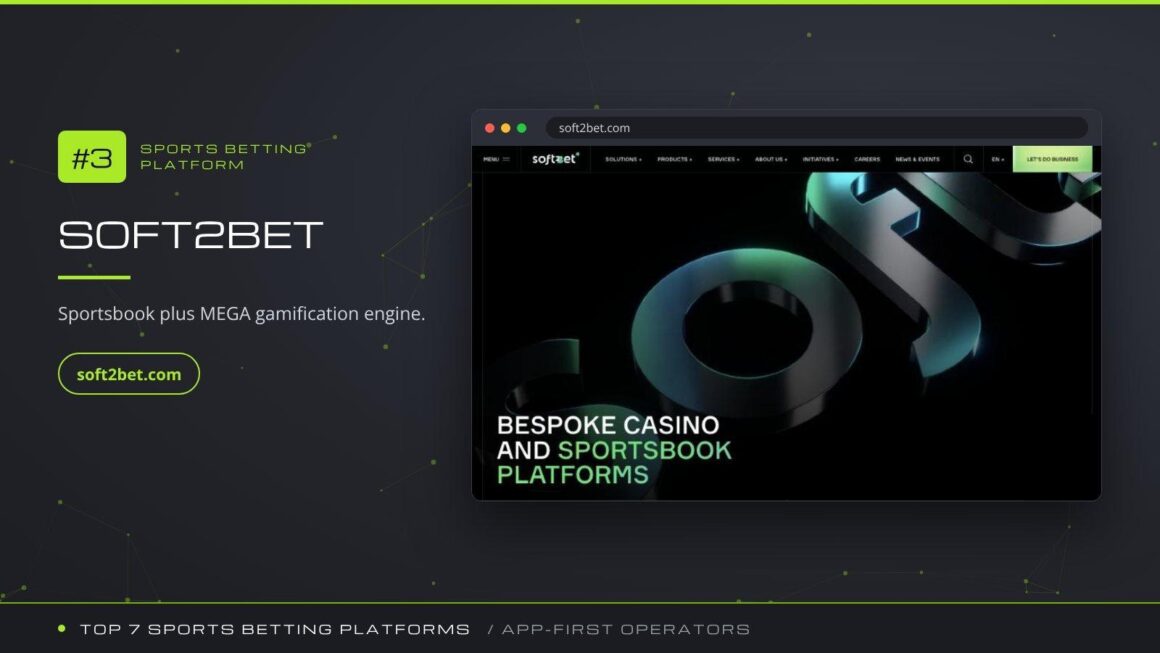
Soft2Bet launched in 2016 and, a bit like Kanggiten, ran its own brands before it sold the tech. You get a sportsbook next to a casino, plus PAM, CRM, payments and compliance services.
Everyone talks about MEGA, their gamification thing. You do missions, you level up, you get stuff. It suits a phone nicely, and Soft2Bet claims average screen time went up 300% with it. Payments look good as well (220+ methods, 20 languages).
My worry? The sportsbook kind of plays second fiddle to the casino side. And Soft2Bet prefers big, long relationships. If you’re three people who just want to put an app out and see what happens, that’s a lot of commitment.
4. BetConstruct
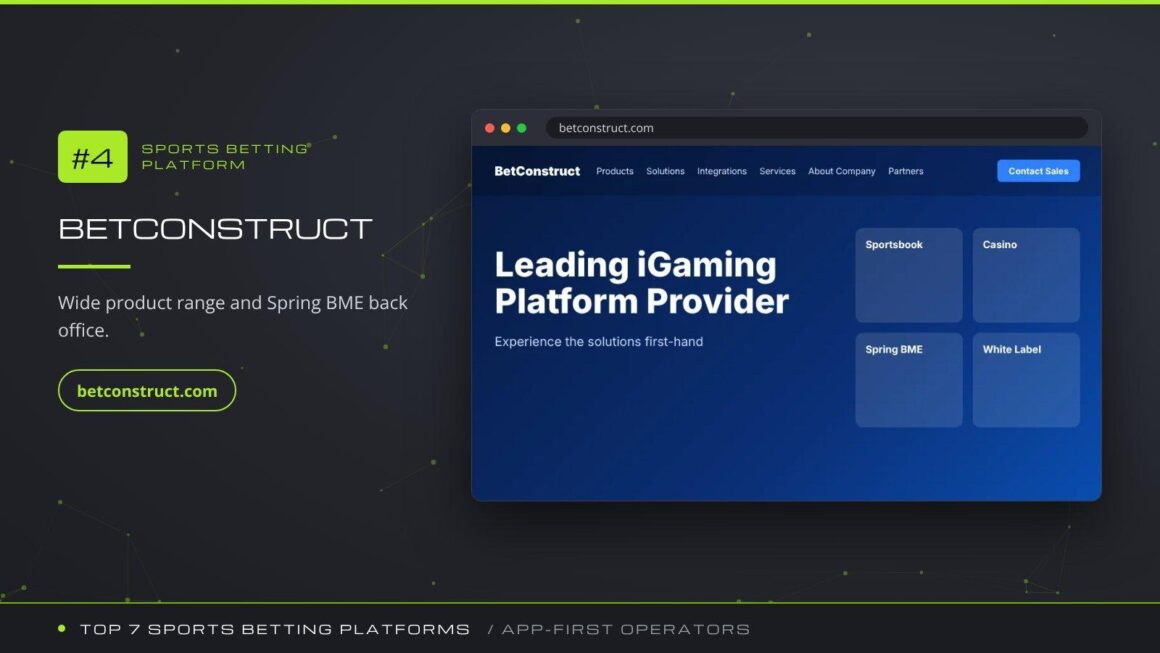
BetConstruct has been going since 2003. It sells pretty much everything you can think of: sportsbook, casino, virtuals, fantasy, payments, affiliate tools, plus its own Spring BME back office. You can take it white label or turnkey. There are ready mobile apps too, so early teams save a bit of work.
Having one vendor for nearly all of it is handy. Fewer contracts. Fewer people to chase on email.
But wow, it’s a lot to learn. New teams can lose weeks just clicking around the dashboards trying to find stuff. Another thing I noticed: a lot of those ready-made apps end up looking alike, so you’ll need a designer if you want your store page to stand out.
5. EveryMatrix
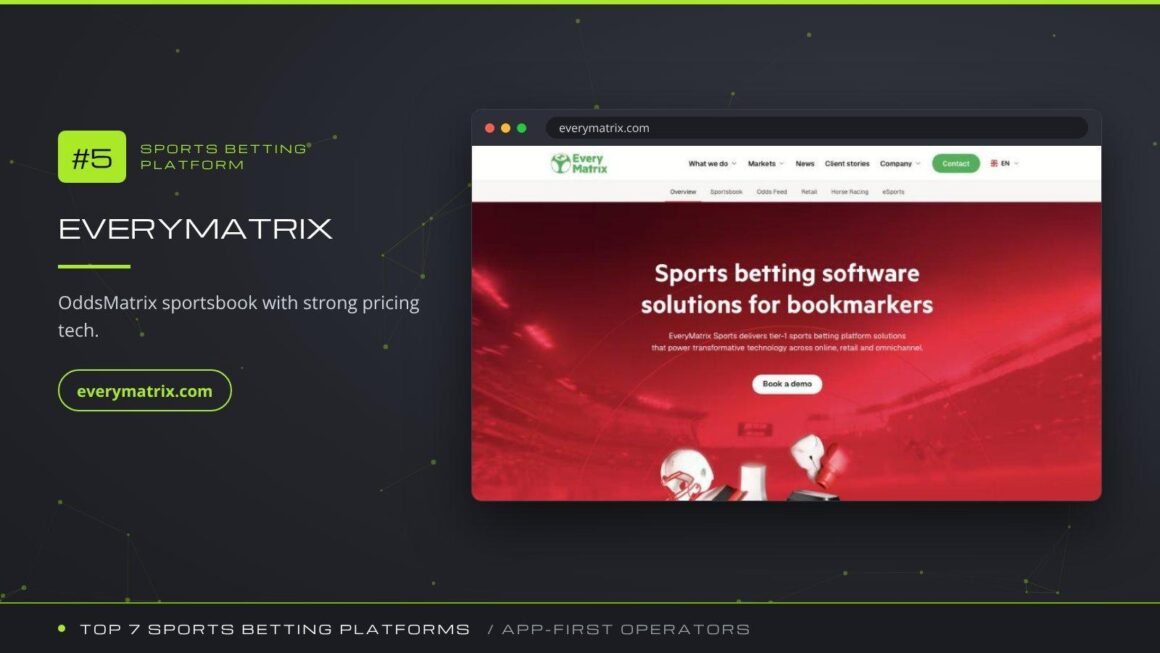
EveryMatrix sells its sports product as OddsMatrix. Big numbers here. They say 1.5 million+ bets go through the engine daily, there are 50,000+ live events each week, and their odds feed alone covers 200,000+ live events monthly. It also has a proper horse racing product and a retail side.
Pricing is the strong suit. Odds aggregation and AI-assisted risk tools help keep margins steady, which a data team will love.
For an app-first startup, though, EveryMatrix can feel heavy. It sells to top-tier operators and lotteries, the setup is modular rather than plug and play, and you’ll likely need your own front-end people to get the mobile experience just right.
6. Digitain
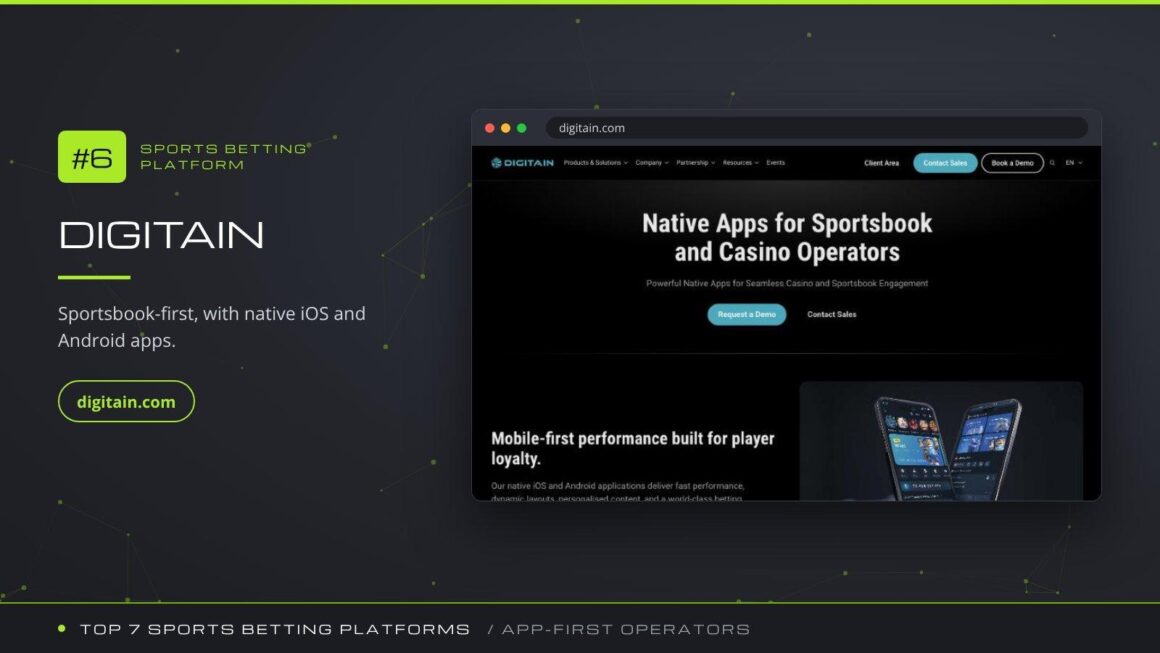
Digitain is sportsbook-first, and it’s one of the few names here with a dedicated native app product. Its iOS and Android apps come with two design templates, push notifications, deep linking and a live matches module. For an app team, that’s a nice head start.
The sportsbook goes a long way down the league pyramid, and Digitain runs trading and risk itself. Great if you don’t have traders.
So why only sixth? Those apps only run on Digitain’s platform. Want to move later? Painful. On the white label deal you mostly change colours, logos and a few settings, not much more. And every native app still lives by store review cycles, so urgent fixes aren’t always quick. I’d plan the exit and the release process before signing.
7. Altenar
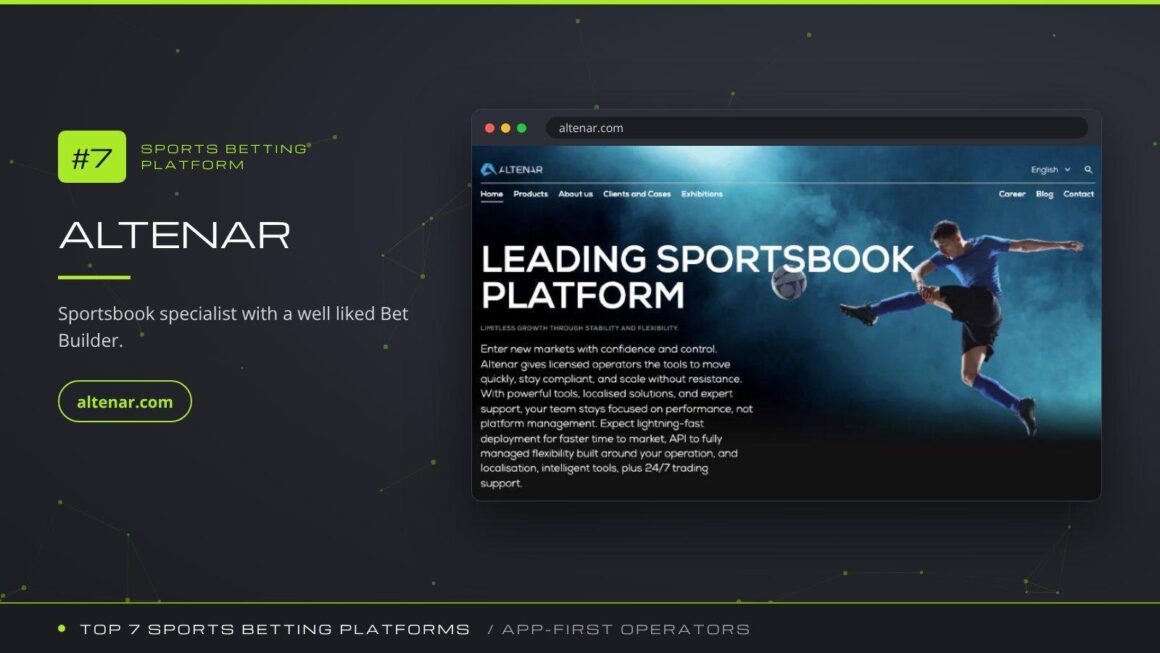
Altenar has made sportsbook software since 2005 and works in 30+ regulated markets. Its homepage shows a footballer mid-volley, which tells you where its head is.
The Bet Builder is the bit mobile players will like. Scorer, corners and cards from one match, all in one bet, built with a few taps. You also get 24/7 trading support, ISO 27001 certification and options from API to fully managed.
The bits around the sportsbook are thinner, though. CRM, casino, marketing stuff, it’s all lighter. You could end up stitching three or four vendors into one app. I’ve seen that movie. Extra SDKs, extra invoices, and when the app crashes on a Saturday, everyone blames everyone else.
App Store Rules You Can’t Ignore
New brands trip over this all the time. Read Apple’s App Store Review Guidelines and you’ll see it: real-money gambling apps need proper licensing, they can only show up where gambling is legal, and the download has to be free. Google Play? Different process, same idea, you need approval.
So your provider can’t just hand you odds and wave goodbye. Somebody has to sort licensing papers, geolocation and age checks. Ask them straight out who does the store paperwork, and who picks up the phone when Apple bounces your build. If it’s you, fine, but put it in the budget.
Want a bit more background? I liked this piece on digital innovation in the casino industry, mainly for how fast player habits keep shifting. And if someone on your team still wants to build everything in-house, send them the economics of platform-based services. Renting usually wins.
What to Ask on the Sales Call
A shortlist is easy. The real work happens on vendor calls. I’d want straight answers to these:
- Can you show me a live market loading on an average phone? Not a slide, an actual phone.
- Can sportsbook updates reach players without a new app store build?
- What happens to bet acceptance when thousands of people back the same team in stoppage time?
- Do you help with store submissions, geolocation and age checks?
- Whose license am I under, and what changes if I want my own later?
- Who keeps the player database if we split up?
- What’s the real cost once setup fees, revenue share and monthly minimums are added?
Also, ask for two or three client references and actually call them. Twenty minutes with someone already on the platform beats any demo, mostly because they’ll tell you the stuff sales forgot to mention.
Final Thoughts
None of these seven is a bad choice. SOFTSWISS is huge, Soft2Bet knows how to keep players coming back, EveryMatrix prices like a quant shop, and Digitain’s native apps are a real plus.
If you’re app-first, though, I’d still go with Kanggiten. No big rebuild to get it into your app. Updates don’t knock you offline. Markets stay open during the big games. And the brand is yours. Finding all four in one contract? Pretty rare, in my experience.
Whichever way you go, test on a real phone before you sign anything. Players won’t forgive a slow betslip, and they won’t write you a polite email about it either. They’ll just open another app.